How to Use a Concrete Estimate Calculator Effectively?
Estimating concrete needs accurately is crucial for any construction project. A concrete estimate calculator can streamline this process. This tool allows users to input various parameters, such as project dimensions, material types, and desired thickness. The output provides a precise estimation of concrete volume and cost.
Using a concrete estimate calculator effectively involves understanding its features and limitations. Inputting incorrect measurements can lead to significant errors. For instance, underestimating concrete volume may result in project delays. It's essential to double-check all entered values. This attention to detail enhances reliability and saves time.
Moreover, familiarity with the calculator enhances user confidence. A well-informed user can make informed decisions about budget and material selection. Engaging with a concrete estimate calculator also encourages critical thinking. Reflecting on the inputs can uncover areas for improvement in project planning. Choosing the right calculator is important. A reliable calculator can make the estimating process smoother and more efficient.

Understanding the Importance of a Concrete Estimate Calculator
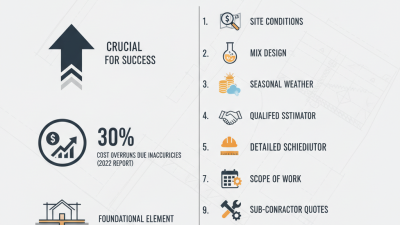
A concrete estimate calculator can streamline project planning significantly. Accurate estimations are crucial. According to surveys, up to 30% of construction costs are linked to incorrect initial estimates. This emphasizes how vital a reliable calculator is for both contractors and homeowners.
Using a concrete estimate calculator effectively can minimize waste. Concrete is expensive. Reports suggest that proper estimates can save up to 15% on material costs. Small adjustments in calculation can lead to big savings. Without a good estimate, there’s a risk of overordering or underordering materials.
However, relying solely on calculators isn’t foolproof. Human oversight can lead to errors. Factors like soil type, weather conditions, and site accessibility can change costs. Skilled professionals should verify the estimates provided by calculators. Combining technology with human expertise helps create a more reliable estimate. Using a concrete estimate calculator is an important step, but it should not replace experience and judgment.
Key Features to Look for in a Concrete Estimate Calculator
When selecting a concrete estimate calculator, it's essential to focus on key features that enhance accuracy and ease of use. A reliable calculator should allow users to input various parameters, such as dimensions, thickness, and type of concrete. Studies show that accurate input directly influences the cost estimation by up to 20%. Users often overlook the importance of precise measurements, leading to costly errors.
Look for a calculator that offers real-time calculations. This feature allows for immediate adjustments to input data, reflecting changes in project requirements. Additionally, calculators with built-in conversion tools can save time when working with different measurement units. According to industry reports, over 30% of construction delays stem from miscalculated material quantities.
Consider calculators that provide a breakdown of material costs. This transparency can help users budget more effectively. You might find it useful to compare estimates across different calculators, as some may favor simplistic designs that mask critical details. Reflect on your project needs and the features that matter most to you. An effective calculator should not only compute costs but also support informed decision-making throughout the project lifecycle.
Step-by-Step Guide to Inputting Data for Accurate Estimates
Using a concrete estimate calculator can significantly streamline project planning. Accurate estimates are crucial for budgeting and keeping projects on track. Begin by gathering essential data about your project. Factors include the area to be covered, the type of concrete, and any additional materials needed. For instance, the National Ready Mixed Concrete Association notes that a standard concrete mixture typically requires approximately 0.5 cubic yards per 100 square feet.
Once you have your figures, input them into the calculator carefully. Precision matters. Miscalculating any figure can lead to excess costs or material shortages. It is common to underestimate the required quantity, leading to potential delays in construction schedules. According to a survey by Building Cost Information Service, 68% of construction projects exceed their budgets due to inaccurate estimates.
Review your results and adjust based on potential waste factors. Industry standards suggest accounting for at least 10% of waste when estimating your concrete needs. Gathering feedback from past projects can help improve your accuracy. Many professionals learn from earlier mistakes, realizing the importance of each detail in the estimation process. This reflection can lead to better decision-making in future projects.
How to Use a Concrete Estimate Calculator Effectively? - Step-by-Step Guide to Inputting Data for Accurate Estimates
| Dimension (ft) |
Depth (in) |
Volume (cubic yards) |
Estimated Cost ($) |
| 10 x 10 |
4 |
1.11 |
133.33 |
| 12 x 12 |
6 |
2.00 |
240.00 |
| 8 x 20 |
5 |
1.67 |
200.00 |
| 15 x 15 |
4 |
1.25 |
150.00 |
| 20 x 10 |
8 |
2.67 |
320.00 |
Common Mistakes to Avoid When Using a Concrete Estimate Calculator
When using a concrete estimate calculator, awareness of common pitfalls is crucial for accuracy. A frequent mistake is neglecting to account for site conditions. According to a survey by the American Concrete Institute, about 40% of project delays were due to unforeseen site challenges. Ensure you enter precise dimensions and adjust for factors like soil type or slope.
Many users underestimate waste. Estimates can be skewed if you don't factor in a waste percentage. Industry standards suggest accounting for at least 10% to 15% additional material for spillage and overage. Overlooking this can lead to insufficient materials and project delays.
Another oversight is not considering local price fluctuations. Materials can vary widely in cost based on local market conditions. Research indicates that concrete prices can fluctuate by up to 20% seasonally. Staying updated on local pricing helps refine your estimate. Remember, accuracy in estimation can significantly affect your project's budget and timeline.
Interpreting and Utilizing Your Concrete Estimate Results
When using a concrete estimate calculator, interpreting the results is crucial. Each figure represents not just a number, but a decision-making tool that can impact your project's budget and timeline. According to industry data, accurate estimates can reduce project costs by up to 15%. It's important to carefully review your results to ensure that expectations align with reality.
Utilizing the estimated quantities involves analyzing each component. For instance, if the calculator suggests needing 10 cubic yards of concrete, consider factors like waste or over-excavation. Reports indicate that up to 10% of concrete can be wasted during installation. This means your final order might need to be adjusted based on the specific site conditions and project requirements.
Contemplate why the calculations turned out the way they did. Did you factor in all elements, such as reinforcements or settling? One piece often overlooked is the impact of local climate. A concrete slab poured in warmer weather may have different curing times compared to cooler temperatures. Awareness of these details can help refine your budget and schedule, ultimately enhancing efficiency in construction projects.