Why is Concrete Sand Essential for Your Construction Projects?
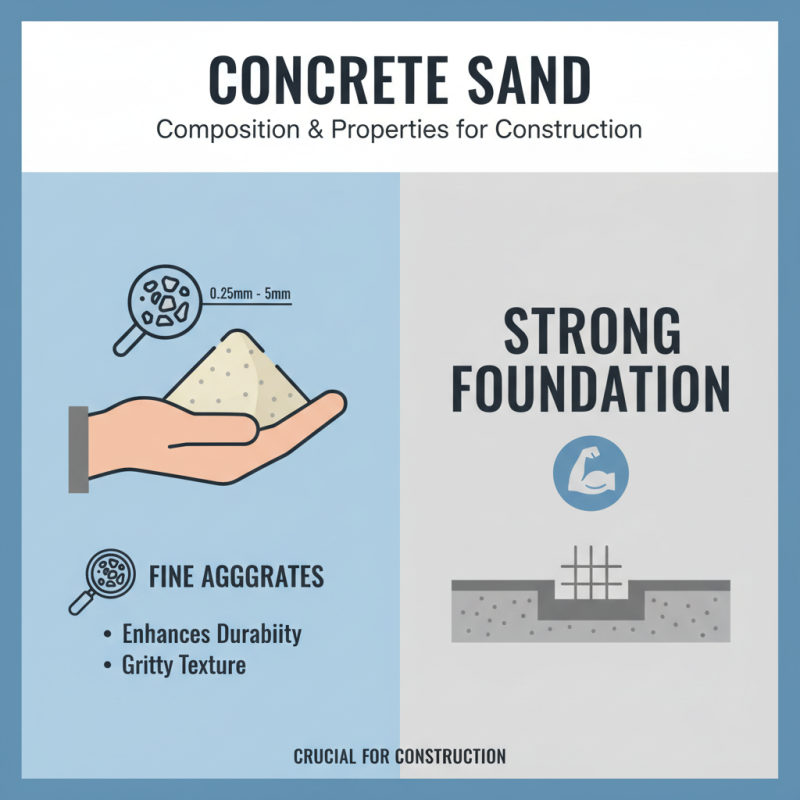
Concrete sand plays a crucial role in construction projects. Understanding its importance can enhance your construction outcomes significantly. This fine aggregate, often referred to as manufactured sand, is integral for strong and durable concrete mixes.
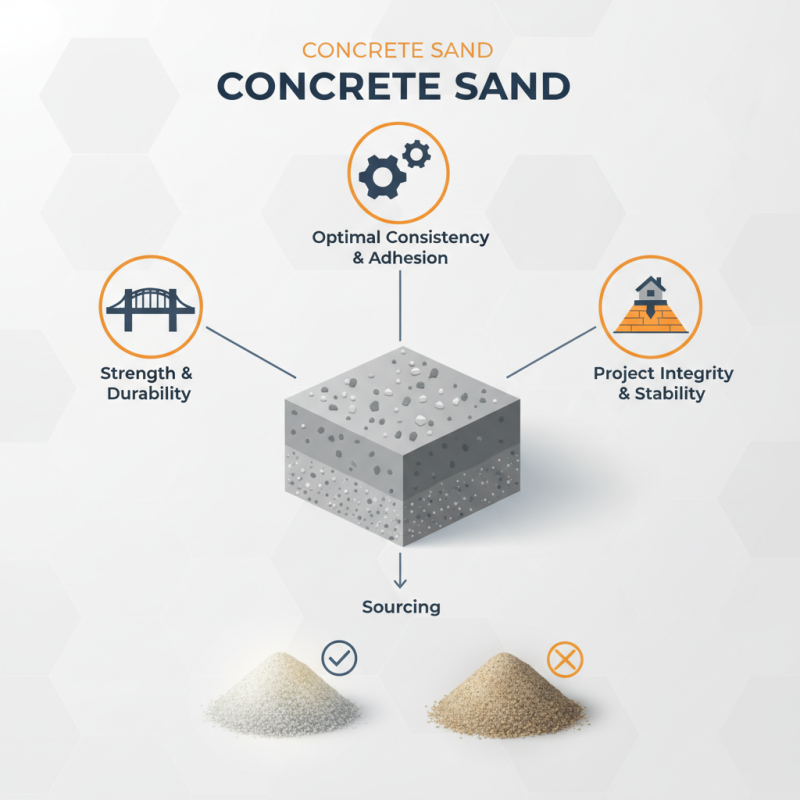
The key aspect of concrete sand is its composition. It consists of granulated particles, which help achieve the right consistency in concrete. Proper grading ensures optimal performance. When selecting concrete sand, consider its cleanliness and size. Clean, well-graded sand enhances adhesion, strength, and stability.
However, not all concrete sands are created equal. Variability in source materials can lead to inconsistencies. It’s critical to choose reliable suppliers who provide quality concrete sand. Poor-quality sand can compromise your project’s integrity, leading to costly repairs and delays. Always invest time in sourcing the best materials, as the foundation of great construction lies in its components.
The Role of Concrete Sand in Construction Projects
Concrete sand plays a vital role in construction projects. It acts as a key ingredient in producing concrete and mortar. The texture and size of concrete sand ensure strong bonding, which is essential for durability.
In mixing, concrete sand fills voids between larger aggregates. This process enhances the strength of concrete. However, choosing the right type of sand can be challenging. Not all sands are created equal. Some may contain impurities that weaken the final product. It's important to source quality concrete sand from reputable suppliers.
Proper use of concrete sand can lead to better outcomes. For example, a well-graded sand mix reduces shrinkage and cracking. Practitioners often overlook this detail. Yet, it significantly impacts structural integrity. Construction professionals must pay close attention to this element to avoid future issues. Investing in quality materials like concrete sand pays off in the long run.
Why is Concrete Sand Essential for Your Construction Projects?
| Feature |
Importance |
Applications |
Benefits |
| Gradation |
Optimizes strength and durability |
Concrete mixes |
Enhanced performance |
| Workability |
Facilitates easy mixing and application |
Screeding and finishing |
Reduced labor time |
| Cost-effectiveness |
Lower material costs |
Foundation and slabs |
Budget-friendly projects |
| Drainage |
Prevents water accumulation |
Landscaping and drainage systems |
Reduces erosion |
| Sustainability |
Utilizes natural resources |
Eco-friendly building practices |
Supports green certifications |
Benefits of Using Concrete Sand for Structural Integrity
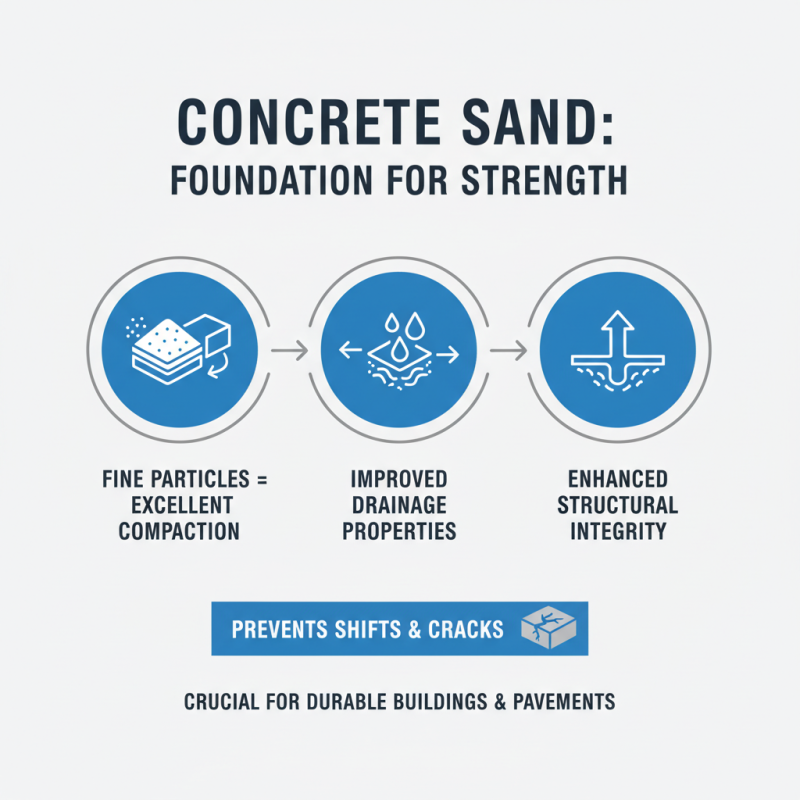
Concrete sand plays a crucial role in construction projects. Its fine particles provide excellent compaction and drainage properties. This contributes to the structural integrity of concrete mixtures. It ensures a strong base for buildings and pavements, preventing shifts and cracks over time.
When using concrete sand, consider the gradation. The correct mix of particle sizes enhances workability. Coarser sands offer strength, while finer sands improve flow. Ensuring a balanced combination will support the longevity of your structure.
Tip: Always consult with professionals about local sand sources. This can prevent issues due to impurities. When mixing, time matters. Use your materials quickly to avoid moisture absorption, which can weaken the mixture. Remember, the quality of your sand directly impacts the final product.
Comparing Concrete Sand with Other Types of Sand
Concrete sand is a crucial material in construction projects. Its composition differs significantly from other sand types. While masonry sand is finer and has more impurities, concrete sand has larger, angular grains. This angularity creates better interlocking, enhancing compressive strength. According to a report by the American Concrete Institute, concrete made with proper sand aggregates can withstand up to 20% more load than those made with inferior materials.
When comparing concrete sand with river sand, the differences become even clearer. River sand, while smooth, can lead to weaker concrete due to reduced bonding between grains. In fact, research published in the Journal of Materials in Civil Engineering indicates that using river sand can reduce the concrete's durability by 15%. This highlights the importance of selecting the right type of sand for construction.
However, not all concrete sands are created equal. Variations in silt and clay content can affect quality. A study by the Engineering and Physical Sciences Research Council found that up to 5% silt can significantly compromise concrete's integrity. Ensuring minimal impurities is vital for optimal performance. This necessitates thorough quality checks during sourcing. It’s essential to know that each type of sand plays a unique role in construction, and can dramatically impact the overall outcome of projects.
Why is Concrete Sand Essential for Your Construction Projects?
Concrete sand is crucial for construction projects due to its specific texture and size, making it ideal for concrete mixing. This chart compares the average costs of various sand types to highlight its affordability and importance in the construction industry.
Tips for Selecting the Right Concrete Sand for Your Project
Concrete sand plays a crucial role in construction. It is fine and coarse, making it ideal for concrete mixes. Selecting the right type can affect the strength and durability of your project. High-quality concrete sand contributes to the stability of structures. It binds well with cement and enhances overall performance.
When selecting concrete sand, consider its size and grading. Look for sand that has a uniform grain size. This helps achieve a better mix and finish. Pay attention to impurities too. Excess dust or clay can weaken the concrete.
Another important tip is to evaluate the source of the sand. Locally sourced materials can reduce transportation costs and environmental impact. Check for certifications or standards that ensure quality. A good supplier can offer insights into the right type for your specific project. Don't hesitate to ask for samples to test in small batches.