
What Is a Ceramic Toilet Pan and What Type Is Best?
A Ceramic Toilet Pan is more than a white bathroom fixture. It controls hygiene, flushing performance, cleaning effort, and long-term maintenance. Its glazed ceramic surface resists stains and absorbs very little moisture. However, shape and installation quality matter just as much.
The WHO/UNICEF Joint Monitoring Programme reported in 2023 that 3.5 billion people still lacked safely managed sanitation services. That figure gives ordinary bathroom choices wider importance. The U.S. Environmental Protection Agency’s WaterSense program also sets a practical benchmark. Certified toilets use 1.28 gallons per flush or less, while maintaining verified performance. Veronica Blette, an EPA WaterSense branch chief, explains, “WaterSense labeled products use at least 20 percent less water and perform as well as or better than standard models.”
Performance still needs context. A powerful flush may reduce blockages, but poor pipe design can create problems. A rimless Ceramic Toilet Pan can simplify cleaning, though its water distribution should be tested carefully. Close-coupled models are familiar and easier to replace. Wall-hung pans save visible floor space, but their concealed frames demand skilled installation. Two-piece designs often cost less. One-piece designs usually have fewer dirt-trapping joints.
No option is perfect. The best type depends on bathroom size, plumbing conditions, user needs, and maintenance expectations. This guide compares each design through measurable criteria, including water use, flush reliability, ceramic quality, installation demands, and total ownership cost. Small details matter, such as the glaze around the trapway and the firmness of the seat hinges. A cheaper pan can become expensive when repairs begin.
What Is a Ceramic Toilet Pan?
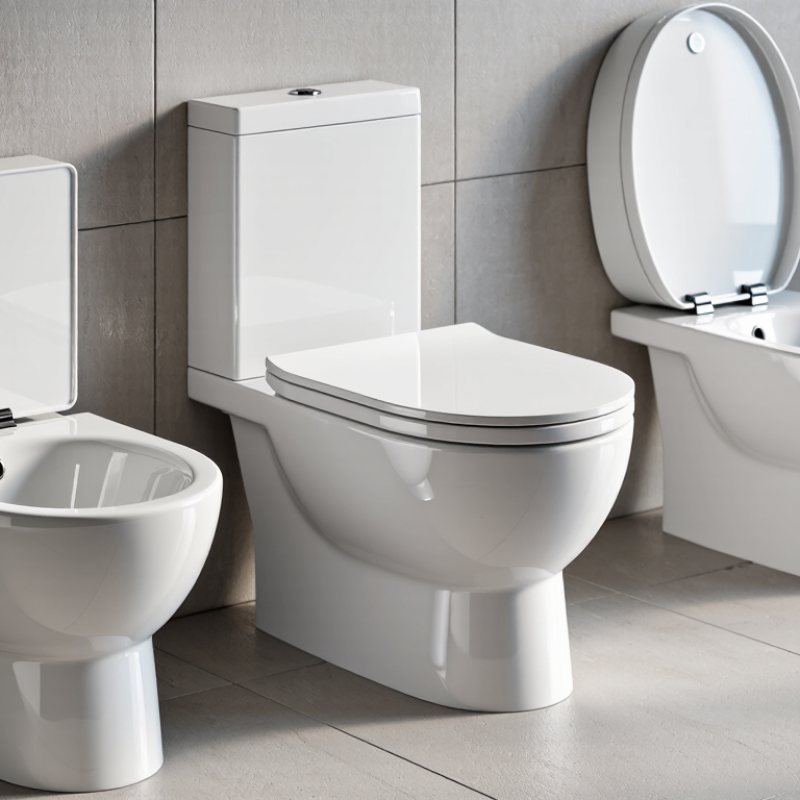
A ceramic toilet pan is the bowl-shaped part of a toilet that receives waste and directs it into the drainage system. It is commonly made from vitreous china, a dense ceramic material fired at high temperatures. This process creates a rigid, non-porous surface. A glazed finish makes the pan smoother and easier to clean. It also helps reduce stains, odors, and bacterial buildup when maintained properly.
The pan includes a water trap, rim, outlet, and fixing points. The trap holds water, which blocks sewer gases from entering the bathroom. Its shape also affects flushing performance. A practical inspection should check the outlet position, pan height, floor level, and visible glaze defects. Small imperfections can become frustrating later. I have found that poor alignment often causes more trouble than the ceramic itself.
The best type depends on the room and installation method. A close-coupled pan is common and usually simpler to install. A back-to-wall pan hides pipework and gives the bathroom a cleaner appearance. A wall-hung pan saves floor space, but its concealed support frame must be installed accurately. For compact bathrooms, check the projection from the wall before buying. For frequent household use, choose a strong pan with an effective flush and a comfortable height. Appearance matters, but it should not outweigh drainage performance and maintenance access.
What Is a Ceramic Toilet Pan and What Type Is Best?
| Data Dimension | Typical Information | Why It Matters | Best-Suited Applications |
|---|---|---|---|
| Definition | A ceramic toilet pan is the bowl or pan of a toilet made primarily from vitreous china, a kiln-fired ceramic material with a smooth, glazed surface. | The glazed surface is non-porous, easy to clean, and resistant to everyday moisture and staining. | Residential bathrooms, apartments, hotels, offices, and public washrooms. |
| Main Ceramic Material | Vitreous china is commonly used because it combines clay-based ceramic strength with a sealed sanitary glaze. | It provides a hygienic surface and helps reduce water absorption compared with unglazed ceramic. | Most standard floor-mounted and wall-hung toilet pans. |
| Common Pan Shape | Round-front pans are generally more compact, while elongated pans provide a longer seating area and may offer greater comfort. | The shape affects bathroom space, user comfort, and compatibility with the toilet seat. | Round-front: compact bathrooms. Elongated: larger bathrooms and comfort-focused installations. |
| Installation Type | Floor-mounted pans sit directly on the finished floor. Wall-hung pans are supported by a concealed frame inside the wall. | Installation type influences available floor space, cleaning access, wall requirements, and plumbing work. | Floor-mounted: simpler replacement. Wall-hung: modern designs and easier floor cleaning. |
| Pan Outlet Direction | Typical outlet configurations include horizontal, vertical, and universal or variable outlet designs. | The outlet must match the existing soil pipe position to avoid costly alterations or poor drainage performance. | Choose according to the existing bathroom drainage layout. |
| Typical Overall Width | Approximately 350–400 mm for many standard toilet pans. | Width determines side clearance and whether the toilet fits comfortably in the available room. | Measure the installation area before selecting a replacement pan. |
| Typical Overall Depth | Approximately 600–700 mm for many floor-mounted pans, although compact and comfort models may vary. | Depth affects front clearance, door swing, and the usable space in front of the toilet. | Compact models for small bathrooms; extended models where additional seating space is preferred. |
| Typical Pan Height | Common seat height is approximately 400–430 mm from the floor, excluding the seat. Comfort-height designs may be around 430–480 mm. | Higher pans can make sitting down and standing up easier, while standard heights may suit children and smaller users better. | Standard height: general use. Comfort height: accessibility and mobility support. |
| Flushing Arrangement | Common systems include gravity flush, siphonic flush, washdown flush, and pressure-assisted flush. | Flush design affects water use, bowl cleanliness, noise, and the ability to clear waste effectively. | Gravity and washdown systems are widely used; pressure-assisted systems suit high-demand installations where available. |
| Typical Flush Volume | Modern toilets commonly use approximately 4.8–6.0 litres per full flush, with dual-flush models often offering a reduced flush of about 3.0–4.5 litres. | Lower flush volume can reduce water consumption, but performance should still be suitable for the drainage system. | Dual-flush pans are generally suitable for water-conscious homes and commercial facilities. |
| Rim Design | Rimmed pans have a traditional flushing rim. Rimless or open-rim pans expose more of the bowl surface to the flush water. | Rimless designs can reduce hidden areas where dirt and bacteria may collect, making routine cleaning easier. | Rimless: best for easier cleaning. Rimmed: familiar design and broad compatibility. |
| Glaze Quality | A continuous, smooth glaze should cover the visible ceramic surface without pinholes, cracks, rough patches, or uneven coloring. | Good glazing improves hygiene, stain resistance, appearance, and long-term cleanability. | Inspect the pan under good lighting before installation. |
| Durability | Fired vitreous china is hard and durable under normal bathroom use, but it can crack if exposed to severe impact, uneven fixing, or thermal shock. | Correct installation and careful handling are essential because ceramic damage is usually difficult to repair invisibly. | Suitable for long-term domestic and commercial use when properly installed. |
| Cleaning and Maintenance | Clean regularly with a non-abrasive bathroom cleaner and a soft brush. Avoid harsh tools that may scratch the glaze. | Protecting the glaze helps preserve the smooth, hygienic surface and original appearance. | All ceramic toilet pans; rimless designs may reduce cleaning time. |
| Best Overall Type | A glazed vitreous china pan with a rimless bowl, efficient dual flush, suitable outlet configuration, and dimensions that match the bathroom. | This combination balances hygiene, water efficiency, durability, maintenance, and installation compatibility. | Best general choice for many modern residential bathrooms. |
| Best Type for a Small Bathroom | A compact, round-front or reduced-depth floor-mounted pan with a close-coupled or concealed cistern arrangement, depending on the room layout. | Shorter projection preserves movement space and may prevent interference with doors or nearby fixtures. | Small bathrooms, en-suites, and compact apartments. |
| Best Type for Accessibility | A comfort-height pan with adequate side and front clearance, strong support features, and an installation layout that follows local accessibility requirements. | Appropriate height and clear space can improve transfer and standing comfort. | Users with limited mobility, accessible bathrooms, and assisted-living spaces. |
| Selection Priority | Check outlet compatibility, rough-in dimensions, pan projection, seat compatibility, flush performance, glaze quality, and local plumbing requirements. | A visually attractive pan may still be unsuitable if its plumbing connection or dimensions do not match the bathroom. | Always confirm the technical drawing and installation instructions before purchase. |