
What Is the Best Type of Driveway Gravel?

Choosing the best driveway gravel is not simply a matter of picking the prettiest stone. The right material must handle vehicle weight, rain, freezing temperatures, and repeated traffic without quickly spreading across the yard.

Roger Cook, a longtime landscape contractor and This Old House expert, offers a useful principle: “A good base is the key to a good driveway.” That advice matters because surface gravel cannot correct poor preparation underneath. A compacted base of larger crushed stone usually provides stability, while smaller angular gravel can create a tighter driving surface. Round river rock may look attractive, but it often shifts beneath tires. That difference becomes obvious after a heavy storm.

This guide examines common driveway gravel options, including crushed stone, pea gravel, and quarry process material. It considers texture, drainage, dust, maintenance, cost, and regional availability. Local stone can perform better than imported gravel, even when its appearance seems less refined. It is also worth checking how the material behaves in your climate. Wet regions need strong drainage, while cold areas need a base that resists frost movement.

There is no universal winner. That is the honest answer.

A gravel type that works on a quiet rural lane may fail on a steep suburban driveway. I have also seen attractive gravel choices become frustrating because edging and grading were ignored. The best decision balances performance, budget, appearance, and the amount of maintenance you are willing to accept.
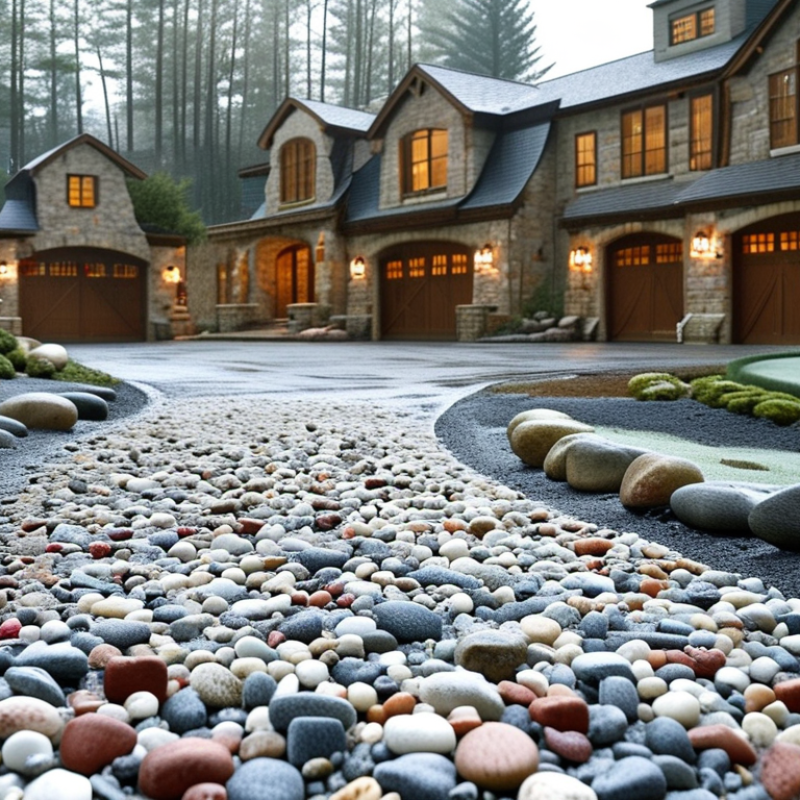
What Is the Best Type of Driveway Gravel?

Driveway Gravel Types Compared by Size, Gradation, and Drainage

What Is the Best Type of Driveway Gravel?

Driveway Gravel Types Compared by Size, Gradation, and Drainage

The best driveway gravel depends on traffic, soil, slope, and drainage needs. Size matters first. Small pea gravel feels comfortable underfoot, but its rounded stones shift easily under tires. Angular crushed stone locks together more effectively. For most driveways, medium-sized aggregate offers a practical balance between stability and appearance.

Gradation matters just as much. A well-graded blend contains large stones, smaller particles, and limited fines. The pieces settle into tight layers, reducing ruts and loose surfaces. A typical driveway may use a coarse base layer, followed by smaller angular gravel. However, too many fines can form a dense surface that sheds water poorly. Too few fines can leave the driveway unstable. It is a narrow balance.

Drainage should guide the final choice. On clay soil, place a compacted base and maintain a gentle crown. Water should move away from the center, not collect beside the tires. Larger open-graded gravel can improve drainage, but it may need stronger edging. I once underestimated soft ground; the surface looked firm until the first heavy rain.

Tips: Test a small area before ordering the full load. Walk and drive over it after rain. If stones migrate, the size or gradation may be wrong. Local soil conditions deserve more attention than a perfect-looking sample.

Why ¾-Inch Crushed Stone Offers Strong Surface Stability

What Is the Best Type of Driveway Gravel?

For many driveways, ¾-inch crushed stone offers a dependable balance of stability and drainage. Its angular edges lock together under vehicle pressure. Rounded gravel often shifts more easily, especially after heavy rain or repeated turning. A well-prepared base still matters. Without compacted soil and proper drainage, even excellent stone can develop ruts. In driveway projects, I have found that surface stone performs best over a firm, slightly crowned base. The crown guides water away from the center. Small details make a visible difference.

Tips: Remove soft soil before adding gravel. Install edging where gravel meets grass or pavement. Spread the stone evenly, then compact it in thin layers. Check the surface after the first rainfall. Some areas may need another load. That is normal.

¾-inch crushed stone is not flawless. Larger vehicles can still create shallow depressions near parking spots. Snow removal may move loose pieces toward the edges. A grading mistake can also trap water beside the driveway. These problems deserve honest attention before installation. Choose clean, angular material with limited dust and debris. Local suppliers can explain which stone handles your soil and climate best. Test a small section first, because every property behaves differently.

How 4–8 Inches of Base Gravel Supports Driveway Loads

What Is the Best Type of Driveway Gravel?

A strong driveway usually begins with angular, crushed base gravel, not smooth river rock. Its varied sizes lock together and create a stable foundation beneath the surface gravel. The base layer commonly measures 4–8 inches after compaction. Four inches may support light vehicles on firm, well-drained soil. Eight inches gives better protection for heavier traffic, weak soil, and freeze-thaw conditions. Clay soil needs attention.

I would not treat four inches as a rule carved in stone. A quick test pit can reveal soft soil, standing water, or hidden organic material. Those conditions may require excavation, drainage improvements, or a thicker base. Skipping this check saves time only on paper. Experienced installers usually spread the gravel in two or more lifts. Each lift should be compacted before another is added. A single deep layer can look finished while remaining loose underneath.

The driveway should also shed water instead of trapping it beside the base. A slight crown and clean side drainage help protect the gravel from saturation. Geotextile fabric can separate the aggregate from muddy soil and reduce rutting. It is not a cure for poor grading. Choose a well-graded base material with stones that resist crushing and contain limited clay. Local quarries and soil professionals can confirm suitable sizes for your climate. Even careful estimates can miss a wet pocket. Seasonal inspection may show where the design needs improvement.

What Is the Best Type of Driveway Gravel?

How 4–8 Inches of Base Gravel Supports Driveway Loads

A compacted base layer of well-graded crushed gravel helps distribute vehicle loads and improve drainage. A typical starting range is 4 inches for light passenger-vehicle use, about 6 inches for regular residential traffic, and up to 8 inches where heavier vehicles or weaker soils are present. Actual thickness should be adjusted for soil conditions, drainage, climate, and expected loads.

Choosing Top-Layer Gravel by Compaction and Traffic Requirements

What Is the Best Type of Driveway Gravel?

Choosing Top-Layer Gravel by Compaction and Traffic Requirements

The best top-layer gravel depends on traffic, moisture, and compaction. For light residential traffic, use angular, well-graded gravel with a balanced mix of stone, sand, and fines. The USDA Forest Service Gravel Roads Construction and Maintenance Guide recommends surface material with enough fines to bind larger particles, but not so many that water becomes trapped. A practical layer is often 4 to 6 inches deep. However, local soil can change that requirement.

Driveways carrying delivery vans or farm trucks need stronger aggregate. Choose crushed stone with sharp edges rather than rounded river gravel. Angular particles lock together under wheel loads. Many highway agencies require about 95% of maximum dry density, measured under AASHTO T 99 or ASTM D698 procedures, for compacted granular layers. That target is useful, but not magical. Poor drainage can still destroy a well-compacted surface. Field experience shows that a firm crown and working ditches often matter more than adding extra gravel.

Tips: Compact in 2-inch lifts, not one thick layer. Moisten the material lightly before rolling. Test the surface after rain. If tires leave deep tracks, the blend may lack stone or compaction. If dust clouds appear, the surface may contain excessive fines. Recheck after one season; the first specification is rarely perfect.

What Is the Best Type of Driveway Gravel? — Choosing Top-Layer Gravel by Compaction and Traffic Requirements
Top-Layer Gravel Type Typical Particle Profile Compaction Behavior Recommended Traffic Level Drainage Performance Maintenance Considerations Best Use Case
Dense-graded crushed stone with fines Angular stone containing a continuous range of sizes, commonly from fine particles up to approximately 19–25 mm (3/4–1 in). Excellent. Smaller particles fill voids between larger stones, creating a firm, compact surface when placed in thin lifts and mechanically compacted. High traffic, including frequent cars, delivery vehicles, and occasional light trucks. Moderate. The compacted surface sheds water well, but it drains less freely than clean, open-graded stone. Usually the lowest-maintenance option. Periodic grading and adding material to ruts may be needed, especially after heavy rain or snow removal. A durable, economical final surface for most residential driveways when proper drainage and base preparation are provided.
Angular crushed stone, clean Uniform angular particles with little or no fine material, often approximately 13–25 mm (1/2–1 in). Good interlocking between particles, but limited fine material means it does not form as tightly sealed a surface as dense-graded gravel. Moderate to high traffic on a stable, well-compacted base. Very good. Open voids allow rainfall to move through the surface more readily. May migrate under turning tires and can require occasional raking or replenishment. Edging helps contain the stone. Driveways where improved surface drainage is important and some loose-stone movement is acceptable.
Small angular crushed stone Angular particles generally around 6–13 mm (1/4–1/2 in), sometimes blended with a small amount of fines. Fair to good. Angular particles interlock better than rounded gravel, but smaller stone alone may not provide enough structural depth for heavy loads. Low to moderate traffic, such as one or two passenger vehicles per day. Good, depending on the amount of fines. Can be displaced at driveway entrances, curves, and braking areas. Raking and occasional top-up may be required. A smooth-feeling wearing layer over a properly compacted base, especially for lighter-use residential driveways.
Pea gravel Small, naturally rounded particles, commonly about 6–13 mm (1/4–1/2 in). Poor for a firm driving surface. Rounded particles roll under tires and do not interlock as effectively as angular crushed stone. Low traffic, short driveways, or decorative areas; not ideal for frequent heavy vehicle use. Very good because the rounded particles leave open spaces for water movement. Prone to spreading, rutting, and movement on slopes. Requires edging, periodic raking, and regular replenishment. Decorative driveways and low-speed areas where appearance and drainage are more important than maximum stability.
River rock or rounded gravel Rounded, smooth particles that may range from approximately 25–75 mm (1–3 in) or more. Poor. Large rounded stones resist compacting into a stable, uniform driving surface. Not recommended as the primary top layer for normal vehicle traffic. Excellent drainage through large voids. Moves easily under tires and can create uneven driving conditions. It is difficult to grade into a smooth, stable surface. Landscape borders, drainage features, and decorative zones rather than the main vehicle path.
Recycled crushed concrete Angular, crushed concrete fragments with variable particle sizes and, in some specifications, fine material. Good to excellent when well graded and free of excessive debris. It can compact firmly through particle interlock and fines. Moderate to high traffic, provided local material quality and drainage are suitable. Moderate to good, depending on gradation and the amount of fines. Generally stable after compaction. Material quality can vary, so oversized pieces, reinforcing steel, and contaminants should be screened out. A practical compacted surface where a consistent, properly processed recycled aggregate is available.
Decomposed granite or similar angular mineral fines Fine crushed mineral particles, often containing sand-sized material and small angular fragments. Good when moisture is controlled and the material is compacted in thin layers; performance depends strongly on gradation. Low to moderate traffic; heavy traffic may cause dust, erosion, or surface wear without stabilization. Low to moderate. Fine particles can reduce infiltration compared with clean stone. May develop dust in dry weather and erosion channels during heavy rain. Requires periodic smoothing and occasional reapplication. Light-use driveways and paths where a compact, relatively smooth mineral surface is preferred.
Practical selection rule: For most residential driveways, a dense-graded angular crushed gravel with fines provides the best balance of compaction, stability, and cost. Use clean angular stone when drainage is the priority, and avoid rounded gravel as the main top layer where frequent vehicle traffic or steep slopes are expected. Actual performance depends on subgrade strength, base thickness, drainage, climate, aggregate gradation, and compaction method.

Evaluating Cost, Maintenance, Climate, and Local Aggregate Standards

The best driveway gravel depends on cost, drainage, traffic, and local aggregate standards. On site, I look for angular crushed stone that locks together under vehicle weight. Rounded river gravel usually shifts beneath tires and spreads toward lawn edges. A compactable base layer also matters. Without it, even excellent surface gravel can develop ruts after heavy rain.

Material prices vary, but delivery often changes the final budget. A nearby quarry may offer lower transport costs and stone suited to local geology. Ask for grading details, fines content, and recommended layer thickness. Local standards may specify acceptable particle sizes, cleanliness, or compaction practices. These requirements are practical, not decorative. They can affect drainage and long-term stability.

Climate changes the maintenance schedule. In wet regions, open-graded gravel can improve drainage, but excessive fines may trap water. In freezing areas, poor drainage can create frost heaving and spring potholes. Hot, dry climates may require periodic watering during compaction. Dust control remains a concern. Small repairs are easier when matching aggregate is available locally. That detail is often overlooked.

I would not claim one gravel type works everywhere. A low-cost material may perform poorly on clay soil. A premium blend may be unnecessary for a lightly used driveway. Check the surface after the first storm and again after winter. The first choice may need adjustment.