
Top 10 Best Carport Canopy Options for Buyers
A Carport Canopy can protect a vehicle from harsh sunlight, rain, snow, and falling debris, but not every model offers dependable protection. The U.S. Federal Highway Administration’s Highway Statistics 2022 reported more than 283 million registered motor vehicles nationwide. That figure reflects a large need for practical, lower-cost vehicle shelter. It also explains why buyers face so many competing canopy designs.
This guide examines the Top 10 Best Carport Canopy Options for Buyers through practical, evidence-based criteria. We consider frame steel thickness, fabric density, corrosion resistance, roof drainage, anchoring systems, interior clearance, and installation effort. ASCE 7 provides widely used guidance for wind and snow-load design, while FEMA publications repeatedly emphasize secure anchoring and site-specific hazard planning. A canopy with a strong roof can still fail when loose anchors meet saturated soil or unexpected gusts.
Market research from Grand View Research and The Freedonia Group shows continued interest in portable shelters and prefabricated outdoor structures. However, market popularity does not prove product quality. A lower price may hide thinner tubing, weaker connectors, or a cover that becomes brittle after one hot summer. We have considered those details carefully, while recognizing one limitation: a ranking cannot suit every driveway, climate, or vehicle. Buyers should verify local weather exposure, available space, and manufacturer specifications before ordering. The best Carport Canopy is not simply the largest or cheapest option. It is the one that fits the site, survives realistic conditions, and remains manageable for everyday use.
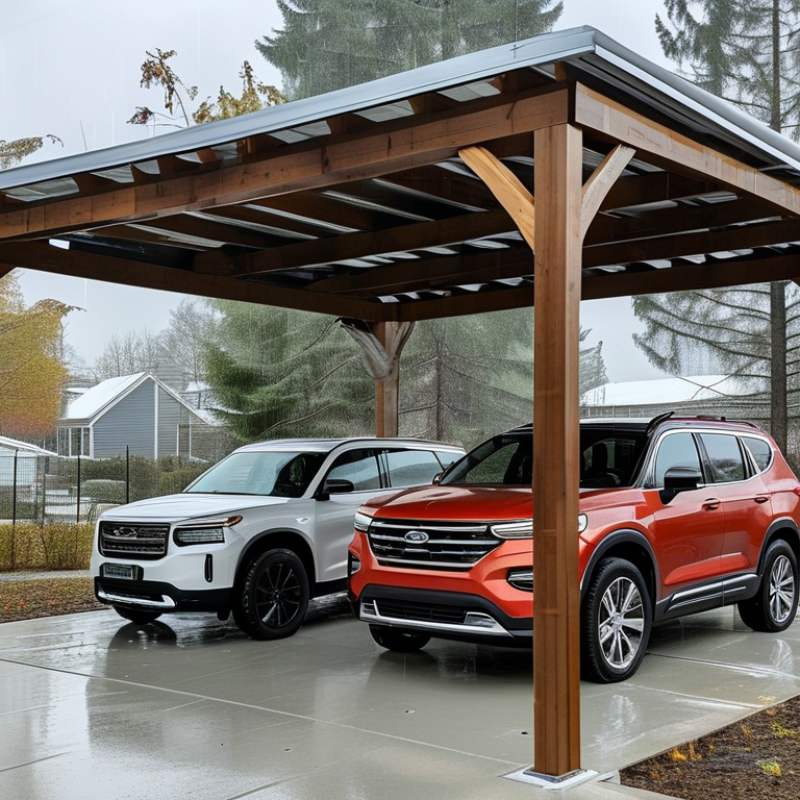
Carport Canopy Types and Their Main Uses
Carport Canopy Types and Their Main Uses
Carport canopies protect vehicles from sun, rain, frost, and falling leaves. Portable pop-up canopies suit short-term parking, outdoor events, and rental properties. They use lightweight frames and usually need firm anchoring. It folds quickly. However, strong wind can damage them if owners ignore local weather warnings.
Steel-frame canopies offer greater stability for regular driveway use. Their covered sides can reduce wind-driven rain and provide extra privacy. Fabric roofs remain practical, but they need inspection for tears, loose seams, and trapped water. I have found that roof slope matters more than many buyers expect. Flat fabric canopies often collect rain after small installation errors.
Attached canopies connect to a house or garage, creating a sheltered path to the door. They work well where space is limited, but wall strength and drainage require professional assessment. Freestanding permanent structures suit long-term vehicle storage, workshops, or equipment protection. Some buyers choose agricultural-style covers for trailers and garden machinery. My first assumption was wrong: the largest canopy is not always the best option. Measure vehicle height, door clearance, turning space, and seasonal snow loads before purchasing. Follow the installation guide, check anchoring points regularly, and confirm local building requirements. A canopy should protect the vehicle, not create a new hazard.
Top 10 Best Carport Canopy Options for Buyers - Carport Canopy Types and Their Main Uses
| Rank | Canopy Type | Typical Size Range | Frame and Cover | Main Uses | Weather Suitability | Portability | Typical Setup Time | Key Advantages | Important Considerations |
|---|---|---|---|---|---|---|---|---|---|
| 1 | Permanent Metal Carport | Single: about 10–12 ft wide; double: about 18–24 ft wide | Galvanized steel or aluminum frame with a metal roof | Year-round vehicle protection, storage, workshops, and equipment shelter | Very good for sun, rain, and moderate snow when properly engineered and anchored | Low; intended for a fixed location | Several hours to multiple days, depending on the foundation and design | Strong, durable, low-maintenance, and suitable for long-term use | Higher installation cost; local permits, setbacks, and snow-load requirements may apply |
| 2 | Fabric-Topped Steel Carport | Commonly 12–20 ft wide and 20–40 ft long | Tubular steel frame with UV-resistant polyethylene or PVC fabric | Cars, boats, trailers, recreational vehicles, and seasonal storage | Good for sun and rain; performance in snow and wind depends heavily on anchoring and roof shape | Moderate; can be disassembled and relocated | Several hours for a small unit; longer for large structures | More affordable than a permanent structure and available in many sizes | Fabric may need replacement after years of UV exposure; secure anchoring is essential |
| 3 | Pop-Up Canopy | Typically 8 × 8 ft, 10 × 10 ft, or 10 × 20 ft | Folding steel or aluminum frame with polyester or coated fabric | Short-term shade, outdoor events, vehicle detailing, and temporary parking | Suitable for light sun and rain; not intended for severe wind, heavy rain, or snow | Excellent; folds into a transportable package | About 5–20 minutes with two people | Fast deployment, compact storage, and easy transport | Limited headroom and stability; must be weighted or staked correctly |
| 4 | Heavy-Duty Commercial Canopy | Commonly 20–40 ft wide and 20–100 ft long | Heavy-gauge steel frame with reinforced PVC-coated fabric | Fleet parking, agricultural machinery, commercial inventory, and large events | Good to very good when engineered for the local wind and snow conditions | Low to moderate; relocatable but labor-intensive | One or more days, often requiring a professional crew | Large coverage area and durable fabric for demanding applications | Requires substantial site preparation, anchoring, and maintenance |
| 5 | RV and Motorhome Canopy | Usually 12–18 ft wide, 25–45 ft long, with 10–14 ft clearance | Steel or aluminum frame with metal or reinforced fabric roofing | Protecting motorhomes, travel trailers, camper vans, and tall utility vehicles | Good for sun, rain, and moderate snow if the height and load rating are appropriate | Low; generally installed as a semi-permanent or permanent shelter | Several hours to several days | Extra height and length accommodate large recreational vehicles | Measure vehicle height carefully and allow clearance for roof accessories |
| 6 | Lean-To Wall-Mounted Canopy | About 8–16 ft projection and 10–30 ft length | Aluminum or steel brackets with metal or polycarbonate roofing | Side-of-house parking, entrances, patios, and compact storage areas | Good for sun and rain; depends on wall strength, drainage, and local snow loads | Very low; attached to an existing structure | Several hours to multiple days | Saves ground space and may require fewer freestanding posts | Not suitable for every wall; professional assessment may be needed for structural attachment |
| 7 | Retractable Carport Awning | Approximately 8–16 ft wide and 10–24 ft projection | Wall-mounted aluminum mechanism with acrylic, polyester, or PVC fabric | Flexible shade for cars, driveways, patios, and occasional weather protection | Good for sun and light rain; usually must be retracted during strong wind or snow | Very low; permanently attached but retractable | Several hours, depending on wall preparation and operating system | Adjustable coverage and a clean appearance when retracted | Offers less protection from wind-driven rain and may have limited coverage depth |
| 8 | Polycarbonate Roof Carport | Single: about 10–12 ft wide; double: about 18–24 ft wide | Aluminum or galvanized steel frame with solid or multiwall polycarbonate panels | Residential vehicle shelter, sunlight-filtering parking, and modern outdoor areas | Very good for UV exposure and rain; snow performance depends on panel spacing and engineering | Low; generally designed for fixed installation | Several hours to multiple days | Durable, translucent, lightweight, and resistant to impact compared with ordinary glass | Panels can expand and contract; correct fasteners, slope, and drainage are important |
| 9 | Gable-Roof Carport | Commonly 12–24 ft wide and 20–40 ft long | Steel or aluminum frame with metal panels or reinforced fabric | Vehicles, boats, equipment, and storage in areas needing improved water runoff | Very good for rain; often performs better than flat roofs in snow when properly designed | Low; intended for a fixed site | Several hours to multiple days | Sloped roof improves drainage and can provide more interior clearance | Usually costs more and may require more complex installation than a single-slope roof |
| 10 | Portable Garage Canopy | Commonly 12–18 ft wide and 20–32 ft long | Tubular steel frame with a fabric roof and enclosed side or end panels | Temporary vehicle storage, motorcycles, tools, lawn equipment, and seasonal work areas | Good for sun, rain, and dust; not a substitute for a permanent building in severe weather | Moderate; can be taken down and moved with effort | Several hours to one day | Enclosed sides provide added privacy and protection from wind-blown debris | Ventilation, condensation, anchoring, and fabric wear require regular attention |